Most children are born curious, but curiosity without the right environment slowly fades. Research from the American Psychological Association shows that creative thinking is one of the most critical cognitive skills for children, linked to stronger problem-solving, emotional resilience, and academic performance.
The good news? Creative thinking is not a talent; it is a skill that parents can actively nurture. Whether your child is in preschool or primary school, the habits you build at home today lay the foundation for the innovators, communicators, and critical thinkers of tomorrow.
This blog explores the four evidence-backed ways to foster creative thinking in your child, plus practical activities you can start right now.
Why Creative Thinking Is Important for Children?
Creative thinking goes far beyond art and music. It shapes how children approach problems, communicate ideas, and adapt to new situations. According to a study published by the Journal of Creative Behaviour, children who engage in creative activities demonstrate higher cognitive flexibility, the ability to shift thinking and consider multiple perspectives.
Key benefits of nurturing creative thinking include:
- Better problem-solving: Children learn to explore multiple solutions rather than expecting a single right answer.
- Stronger emotional regulation: Creative expression helps children process feelings they may not yet have words for.
- Increased confidence: Being encouraged to share ideas without judgment builds self-worth and communication skills.
- Adaptability: Creative thinkers handle uncertainty and change more effectively.
- Lifelong learning mindset: Curiosity, once nurtured, drives a child to keep asking questions throughout life.
4 Effective Ways To Improve Creativity in Kids
Here are the 4 effective ways to improve your child’s creativity.
- Encourage Questions and Curiosity
- Give Children Time, Space, and Resources
- Engage Kids in Curiosity-Driven Activities
- Avoid Over-Rewarding Creativity
Let us explore each in detail.
1. Encourage Questions and Curiosity
One of the most powerful ways to develop creative thinking is to make your child comfortable with questions, especially ones that have no easy answers.
Ask open-ended questions during everyday moments: Why is the sky blue? What would happen if there were no gravity? How do you think fish breathe underwater?
These questions do not just teach facts. They train the brain to wonder, hypothesise, and explore. Child development experts, including those aligned with Montessori learning principles, emphasise that process-driven curiosity is what builds long-term creative intelligence.
Try this at home:
- Introduce your child to age-appropriate documentaries or science experiments.
- Read books that pose open-ended questions and discuss them together.
- Avoid immediately correcting "wrong" ideas — instead, ask, "What makes you think that?"
-
Give Children Time, Space, and Resources
The most underestimated resource for creativity is unstructured time. Busy schedules packed with structured activities leave little room for imagination to roam.
According to Harvard's Center on the Developing Child, free, child-directed play is essential for building executive function skills, the cognitive foundation that supports creativity. Children need time to be bored, explore, and invent their own games.
What this looks like practically:
- Set aside daily "free play" windows with no screens, instructions, or goals.
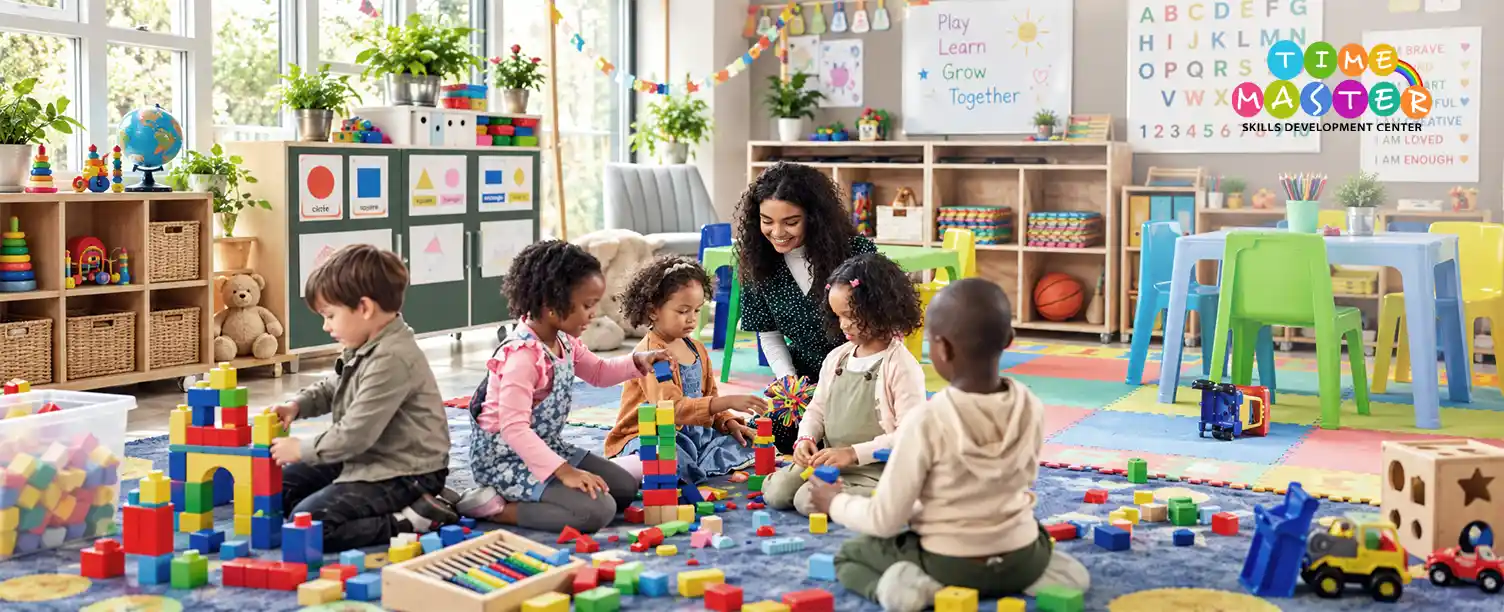
- Provide open-ended materials: building blocks, art supplies, old fabric scraps, clay, and cardboard boxes.
- Let them make a mess. A mess often means creative thinking is happening.
- Avoid judging the output; the process matters far more than the product.
3. Engage Kids in Curiosity-Driven Activities
Creative intelligence grows through exposure to diverse experiences. When children encounter stories, music, nature, drama, and hands-on challenges, they build a richer mental library to draw from when problem-solving.
Critically, children also need to learn that failure is part of creativity. A child who fears making mistakes will self-censor their ideas before they are even spoken. Share your own stories of stumbling and trying again; this normalises experimentation.
Curiosity-building activities to try:
- Storytelling games where each person adds a sentence to a shared story.
- LEGO or block challenges with an open brief ("build something that flies").
- Role-playing and imaginative play scenarios.
- Visits to museums, nature trails, or art galleries with guided conversation.
- DIY craft projects using recycled materials.
- Introduction to classical music, folk tales, or world cultures.
Extra-curricular and after-school activities focused on skill development can also provide structured environments where children explore creativity alongside peers.
4. Avoid Over-Rewarding Creativity
This one surprises many parents: rewarding every creative act can actually undermine it.
Psychological research, including studies by Dr. Teresa Amabile of Harvard Business School, shows that external rewards can shift a child's motivation from intrinsic (doing it for joy) to extrinsic (doing it for praise or prizes). Over time, children may stop taking creative risks because they become focused on producing "reward-worthy" results.
Instead of rewards, try process-focused encouragement:
- "Did you enjoy making that?"
- "What was your favourite part of creating this?"
- "I noticed you tried three different ways, that's great thinking."
This approach emphasises curiosity and effort over outcome, and that is exactly the mindset that sustains lifelong creative thinking.
Creative Activities Parents Can Try at Home
You do not need special equipment to build creativity. Here are simple, effective activities:
|
Activity |
Age Range |
What It Builds |
|---|---|---|
|
Storytelling dice or cards |
4–10 years |
Narrative thinking, imagination |
|
LEGO free-build challenges |
5–12 years |
Spatial reasoning, problem-solving |
|
Drawing from imagination prompts |
3+ years |
Visual expression, confidence |
|
Role-playing and drama games |
4–10 years |
Empathy, communication |
|
DIY science experiments |
6–12 years |
Curiosity, hypothesis-testing |
|
Music exploration (instruments, rhythm) |
Any age |
Auditory creativity, pattern recognition |
Benefits of Creative Thinking for Children: A Summary
Nurturing creative thinking at home gives children essential life skills that go far beyond school. When children are encouraged to think creatively, they:
- Develop stronger self-expression and communication.
- Build resilience by learning that failure is a stepping stone.
- Grow into independent thinkers who can navigate complex situations.
- Celebrate their own uniqueness and appreciate diverse perspectives.
- Enter adulthood with confidence, adaptability, and curiosity intact.
As the saying goes, project the idea that "the sky's the limit." When children believe there are no ceilings on thinking, they grow into people who build new ones.
Final Thoughts
Fostering creative thinking in children does not require grand gestures. It requires consistent, everyday choices, making room for questions, protecting free time, providing rich experiences, and responding to creativity with curiosity rather than judgment.
Start small. Ask one more question today. Put away the schedule for an afternoon. Hand your child some cardboard and tape and step back. You may be surprised by what they create.
Looking for structured programs that help children build creativity, confidence, and communication skills? Explore Edoxi's skill development programs for kids and give your child the environment they deserve.
FAQ's
.webp)