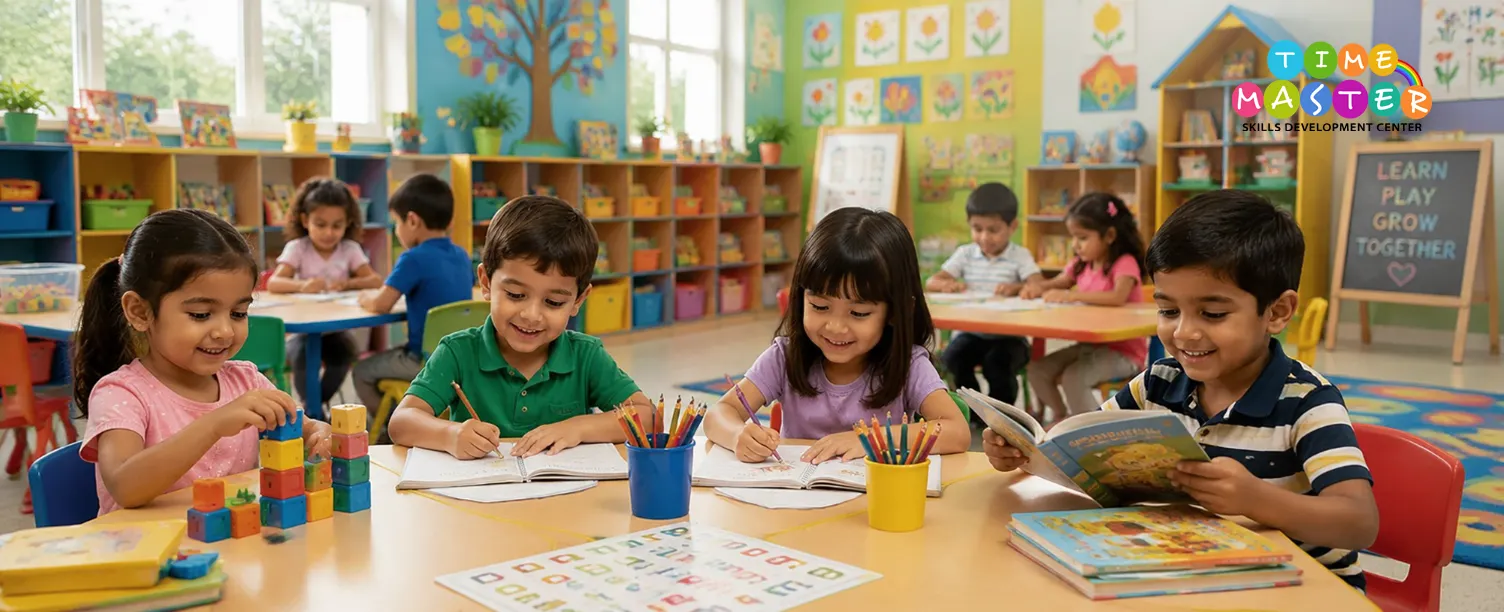
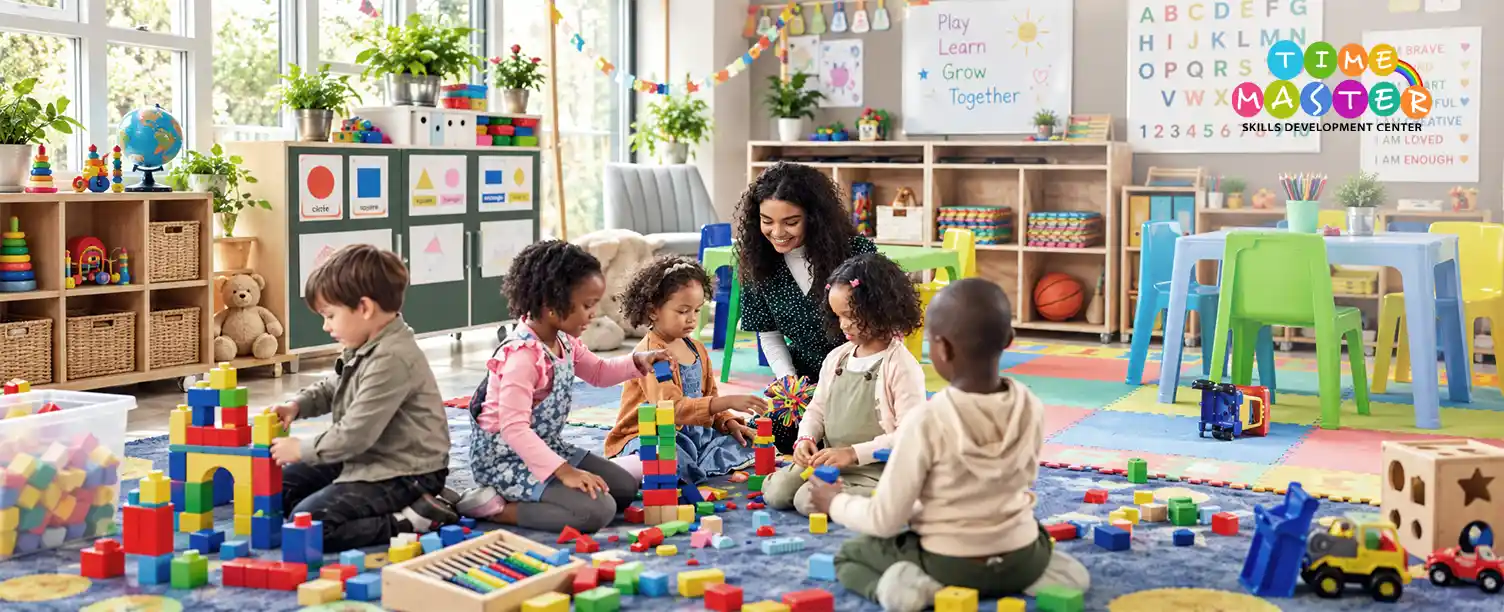
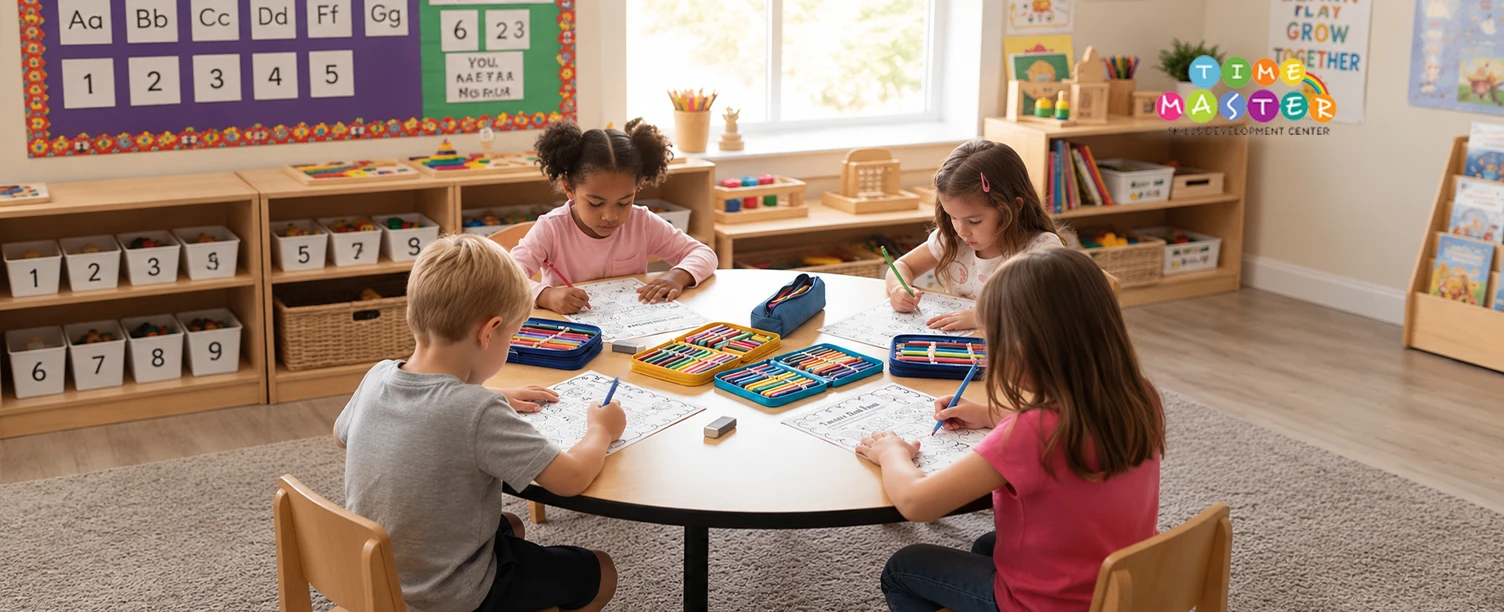
A high-quality preschool matters because the first five years shape how a child thinks, talks, feels, and gets along with others for life. Good preschools give children trained teachers, safe spaces, and daily chances to play, ask questions, and make friends.
This early structured preschool learning builds stronger readiness for school and better social and emotional skills later on.
For parents in Abu Dhabi and Mussafah, that means checking things like ADEK approval, teacher-child ratios, and how a nursery actually spends its day with your child, not just its brochure.
If you're a parent standing at a school gate in Mussafah trying to pick between three nurseries that all look the same on paper, you already know the pressure.
This article breaks it down simply, with real numbers, so you can choose with confidence instead of guesswork.
Why is Choosing a High-Quality Preschool Important for Your Child’s Development?
The top 8 reasons why choosing a high-quality preschool is important for your child’s development are listed below:
-
The first five years build the brain’s foundation
-
Trained, warm teachers matter more than fancy buildings
-
Low teacher-child ratios mean real attention
-
Play-based learning builds real skills, not “just play”
-
Licensing and regulation are non-negotiable checks
-
Predictable routines support a settled, focused child
-
Strong preschools ease separation anxiety, not just ignore it
-
Early quality gaps can follow a child into primary school
1. The First Five Years Build the Brain's Foundation
A child's brain forms most of its core connections before age five. This is the window where language, trust, and basic reasoning skills take root, so what happens in a classroom now carries outsized weight later.
| Age Range | What's Happening | Why It Matters |
|---|---|---|
| 0–2 years | Rapid brain-connection growth |
Sets the base for language and trust |
| 2–4 years |
Language explosion, early social play |
Builds vocabulary and turn-taking |
| 4–5 years | School-readiness skills develop | Prepares for reading, maths, routines |
A preschool in Abu Dhabi built around this stage shapes its whole day differently, rather than treating toddlers like mini schoolchildren.
Studies on early education consistently find that children who attend well-run preschool programmes show stronger early literacy and school-readiness skills than children who miss this stage entirely.
| ❓Why is Preschool Education Important for Your Child?
Preschool education is important for your child as it helps children build essential social, emotional, language, cognitive, and motor skills through age-appropriate learning and play. It also encourages independence, confidence, communication, and school readiness. |
2. Trained, Warm Teachers Matter More Than Fancy Buildings
Research consistently links teacher qualifications and warmth with stronger early learning outcomes, more than any single curriculum brand or building feature. A teacher who kneels to a child's eye level and asks real questions does more for language and confidence than an expensive toy ever will.
- Check staff qualifications, not just years of experience.
- Ask about staff turnover; consistency builds a child's sense of safety.
- Watch how a teacher responds to a child who is upset, not just one who is calm.
- Research reviewing multiple preschool studies links better-qualified teachers with stronger cognitive and language gains in children.
Discover the 5 key features parents should look for in a high-quality preschool before making their choice.
3. Low Teacher-Child Ratios Mean Real Attention
Ratio decides how much genuine one-on-one attention a child gets in a day. A class of 25 toddlers with one teacher cannot offer what a class of 12 with one teacher can.
| Age Group | Recommended Ratio | Why It Counts |
|---|---|---|
| Under 2 years | 1:4 to 1:6 | Babies need constant, close care |
| 2–3 years | 1:6 to 1:8 | Toddlers need guided play and language input |
| 3–5 years | 1:10 to 1:15 | Preschoolers need structured group learning |
Ask directly: what is the actual ratio in your child's specific room, not the nursery-wide average.
Lower ratios consistently correlate with more individual language interaction per child across a school day, which is one of the strongest early predictors of vocabulary growth.
Explore 7 important reasons that show the importance of preschool education that support your child’s early development and learning.
4. Play-Based Learning Builds Real Skills, Not "Just Play"
When a three-year-old builds a block tower, she is practising balance, counting, patience, and problem-solving at once. When two children argue over a toy and work it out, they are practising negotiation and emotional regulation.
- Sand and block play build fine motor control for future handwriting
- Story circle time builds listening and vocabulary
- Pretend play builds empathy, since a child has to imagine another's feelings
A high-quality preschool in Abu Dhabi designs the day around this, instead of filling hours with passive screen time or rote memorisation.
Play-based settings are repeatedly linked in early-years research to stronger self-regulation and problem-solving skills than purely instruction-led formats at this age.
| ❓Why Are Learning Centers Important in Preschool?
Learning centers are important in preschool because they give children opportunities to explore, make choices, solve problems, and learn through hands-on activities. Areas such as reading, art, blocks, science, and pretend play support different developmental skills while encouraging creativity and independence. |
5. Licensing and Regulation Are Non-Negotiable Checks
In Abu Dhabi, nurseries are regulated by the Abu Dhabi Department of Education and Knowledge (ADEK), which sets requirements around safety, staff qualifications, and child welfare.
Thus, you can choose the best nursery in Abu Dhabi by properly knowing the licensing and regulatory status of each institution.
Confirming a nursery's current ADEK standing before enrolling is a simple, concrete step, not paperwork for its own sake.
- Ask for current ADEK approval and permit status directly
- Confirm the permit covers your child's exact age group
- Cross-check any standing the nursery claims for itself
- Regulators like ADEK review safety, staffing, and child welfare standards on a recurring inspection cycle, so a centre's standing can change over time and is worth reverifying, not just taken from an old brochure.
6. Predictable Routines Support a Settled, Focused Child
A child who is hungry, overtired, or rushed through transitions cannot focus, no matter how good the curriculum looks on paper.
A high-quality preschool environment builds steady routines around meals, rest, and outdoor time, because a settled body supports a curious mind.
- A consistent morning circle and snack time signal safety to young children
- Predictable goodbye routines reduce daily anxiety at drop-off
- Outdoor and rest time should be scheduled, not squeezed in when convenient
- Predictability lowers cortisol-driven stress responses in young children, which directly supports attention and mood throughout the day.
7. Strong Preschools Ease Separation Anxiety, Not Just Ignore It
Almost every parent worries about the first drop-off. A well-run preschool expects this and plans for it.
Gradual settling-in sessions, consistent routines, and teachers trained to comfort a crying child calmly reduce anxiety for both child and parent within days, not months.
- Ask what a typical settling-in week looks like before enrolling
- Confirm comfort objects from home are allowed during the first weeks
- A good sign: staff learn your child's name and routine from day one
- Nurseries with structured settling-in processes report noticeably smoother transitions than those that skip this step entirely.
Help Your Child Prepare for Preschool: Discover simple ways to make your child’s transition to preschool smoother and more comfortable.
8. Early Quality Gaps Can Follow a Child Into Primary School
Children who miss out on strong early learning often catch up in some areas later, but gaps in confidence, vocabulary, and self-regulation can carry into primary school.
Primary teachers frequently notice, within the first few weeks of Grade 1, which children came from language-rich, socially engaged preschool settings.
- This isn't about pressuring toddlers to perform.
- It's about a calm, well-staffed environment now, so foundations stay solid later.
- The payoff shows up as confidence and readiness, not test scores.
- Long-running early-education research finds that returns from quality preschool years extend into stronger school progress and social outcomes well beyond kindergarten.
Key Takeaways
- The first five years build the brain architecture children use for the rest of their lives.
- Preschool quality, not just enrolment, is what predicts long-term benefits.
- Trained, warm teachers matter more than fancy buildings or long activity lists.
- In Abu Dhabi, ADEK regulates nurseries, so checking a centre's standing is a real, practical step.
- Small class sizes and low teacher-child ratios lead to more one-on-one attention.
- Play-based learning builds language, maths thinking, and self-control at the same time.
FAQ's
.webp)